Meet Elizabeth
Sharing Connection Through Sacred Expression
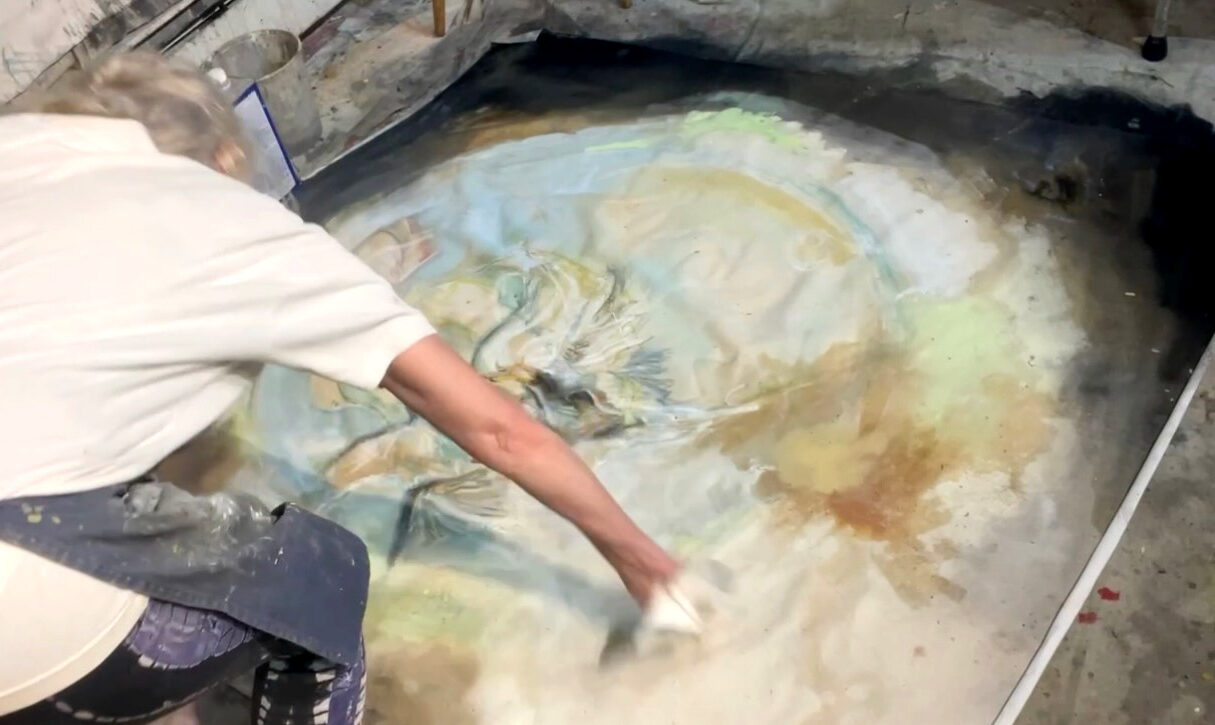
As an artist and art therapist guiding others through grief work and dreamwork, I have made it my mission to normalize and embrace signs, visitation dreams and the felt presence of our Loved Ones as an alternate, compassionate path through grief – one that allows for an ongoing connection with the departed as a healthy way to cope. A path that offers agency, connection and even a softening of pain.
Decades of research in hospice and cultures around the world have shown that, through dreams and visions, deceased loved ones come to help us leave.
They can also come to help us stay.
End of life dreams and visions are well-documented, normalized and even expected in hospice settings.
They bring profound peace, comfort and love to those who are dying, supporting their transition, easing fear, inspiring faith and offering solace to those who are left. They rekindle hope where all was lost and inspire faith where none existed.
Dreams of our departed loved ones can carry the same profound impact for the bereaved. They also occur consistently across cultures and populations.
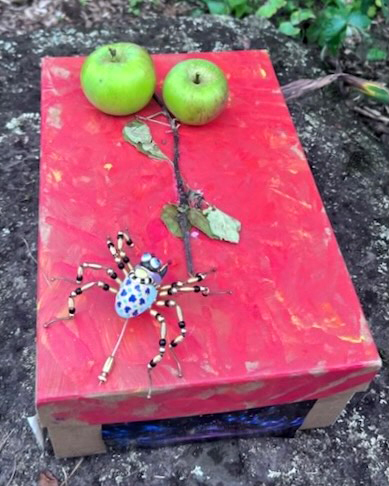
Exterior, Loving Memory Box™
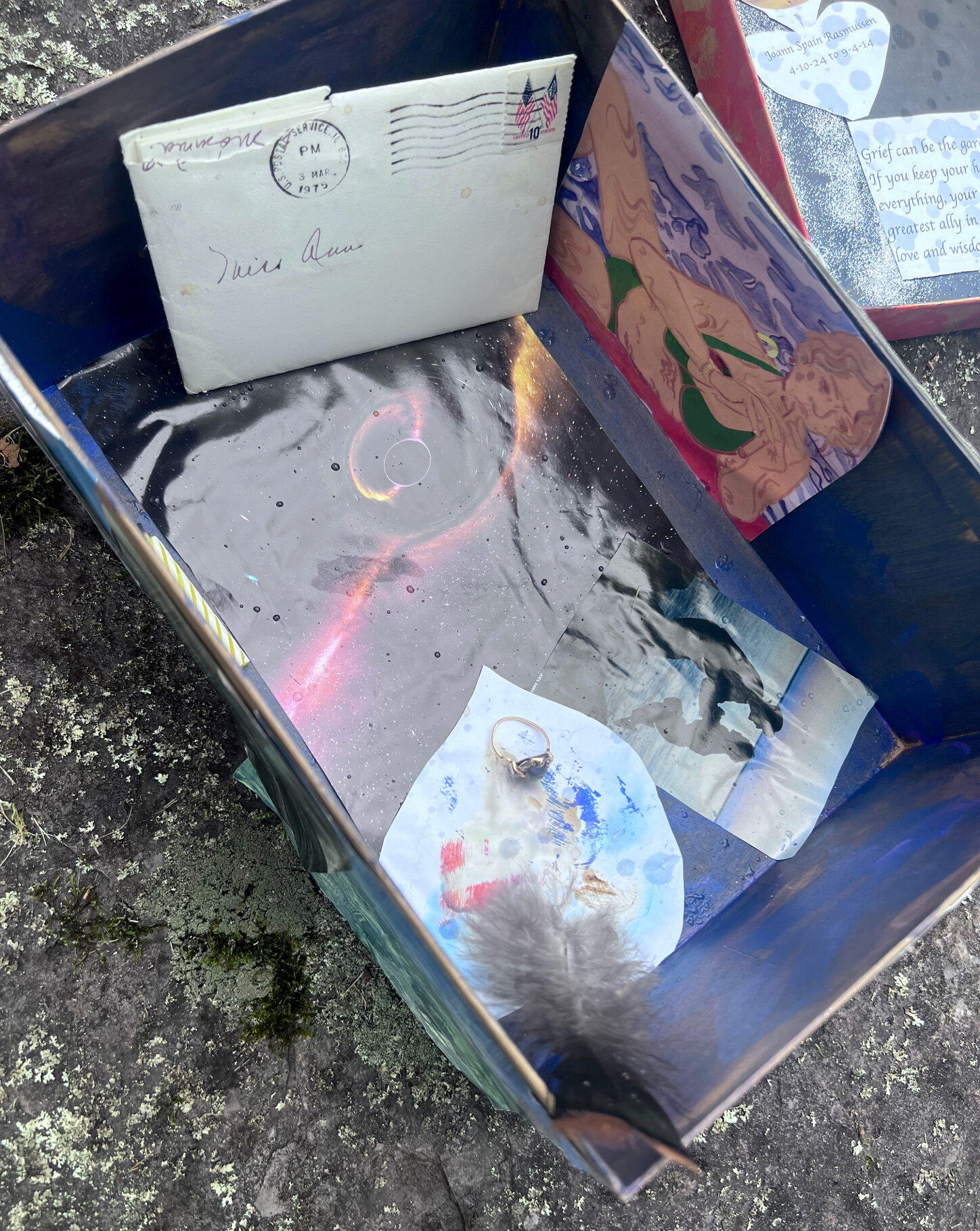
Interior, Loving Memory Box™
And, whatever the guiding force may be, the dream maker seems to have one singular purpose: to support us through life’s most challenging and profound transitions.
Drawing from world wisdom traditions, art therapy, depth psychology, consciousness research and my own lived experiences, I have been blessed to synthesize what I know to be true: Through combining dedicated practices of art, contemplation, and dream incubation, we can evoke meaningful, healing dreams with our departed loved ones.
This work has lifted up another truth: we can cultivate an eternal, spiritual relationship with our loved ones that supports us in living our lives. We can embark on the Journey from Loss to Love.
What the Research Says
- According to the Pew Research Center, 46% of American adults reported a visitation dream from a deceased family member (this number increased to 53% when including other forms of interaction besides dreams).
- Other research shares that 78% of people who lost a pet dreamed of them within six months, and 86% of those who lost a spouse did so within a year.
- Across different types of loss, findings show that 57–86 % of bereaved people report dreams of their deceased loved ones
How Art Therapy Can Open the Door to Spirit
These dreams are frequently experienced as meaningful and even transformational: they can support emotional regulation, adjustment to loss, help process trauma and maintain continuing bonds with the deceased.
Why These Dreams Arise
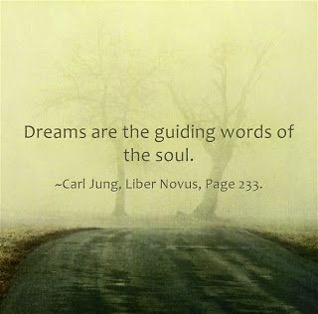 Whatever the guiding force may be, the “why” behind these dreams is both a mystery and deeply personal. Perhaps they are our Loved Ones, responding to our pain, reminding us that they are okay and still with us.
Perhaps they arise as a compassionate necessity—helping regulate or soften our grief. Regardless of origin, they seem to serve one essential purpose: to support us through life’s most profound transitions.
Drawing from world wisdom traditions, art therapy, depth psychology, consciousness research and my own lived experiences, I have been blessed to synthesize what I know to be true: Through combining art therapy, contemplative practice and dreamwork, it is possible to bring forward meaningful, healing dreams with our Loved Ones in Spirit. As another path through grief, we can also use these practices to process our grief and cultivate an ongoing, spiritual relationship with those no longer here.
Art Therapy as a Mediator
Art is a spiritual path, and artists have been communing with spirit through their process since the beginning of time. Renowned psychic Medium Laura Lynne Jackson says, “When we make art, we are channeling the other side; they are coming through us; no artist works alone.”
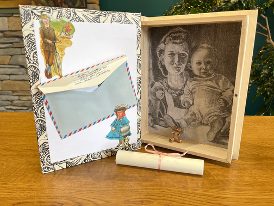
Client Loving Memory Art
There is no need to believe in or visit a psychic medium to connect with our Loved Ones. We can create art that is a gateway to presence, bringing forward flow states, where we may experience timelessness, healing and connection. By virtue of its creation, creative practice may also open a door to something unseen. As Swiss Psychiatrist Carl Jung taught, when we call highly symbolic art into being, another door can open—one that connects us to the deeper psyche and the realm of spirit. Through this door, we honor our loved ones, our grief and ourselves.
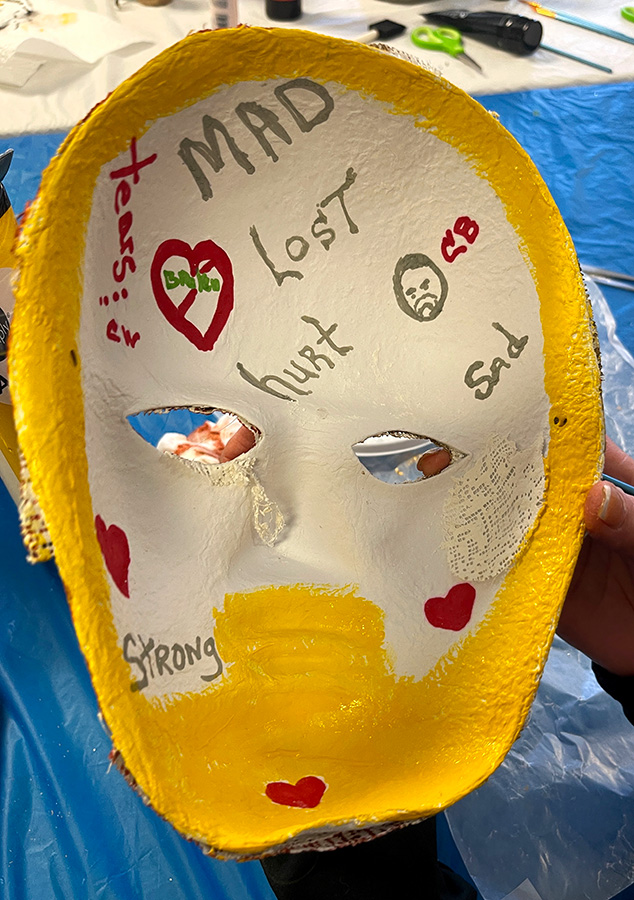
During grief, art making also helps us express what is too painful for words. It can support our journey while transforming it into connection and love: this is The Art of Grief.
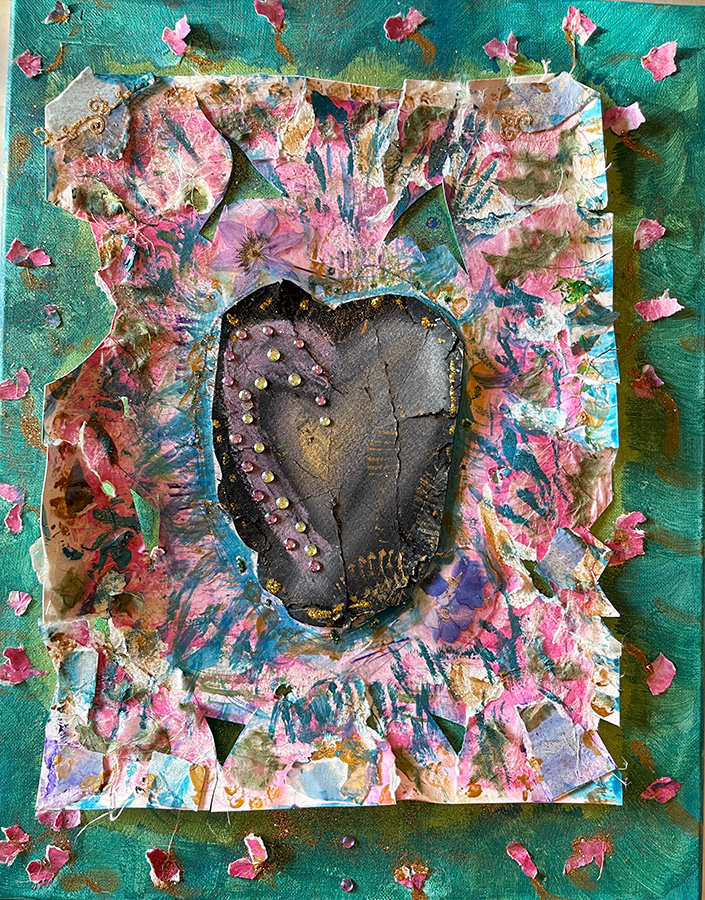
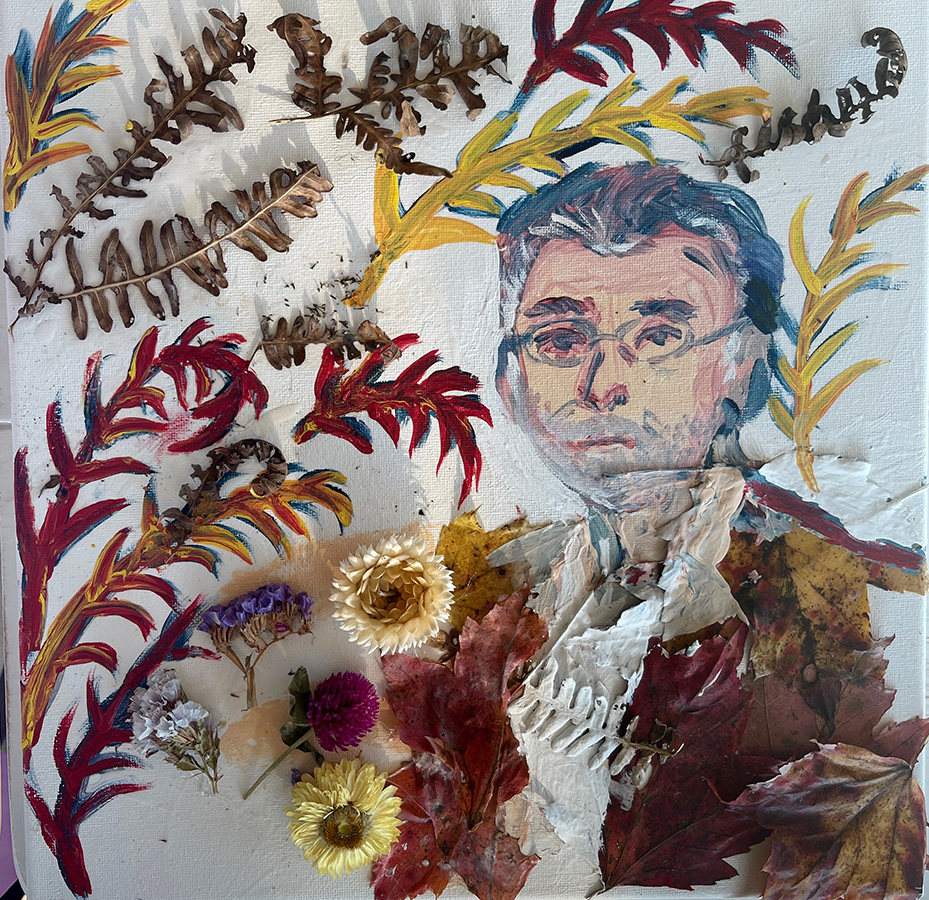
An Ancient and Ongoing Lineage
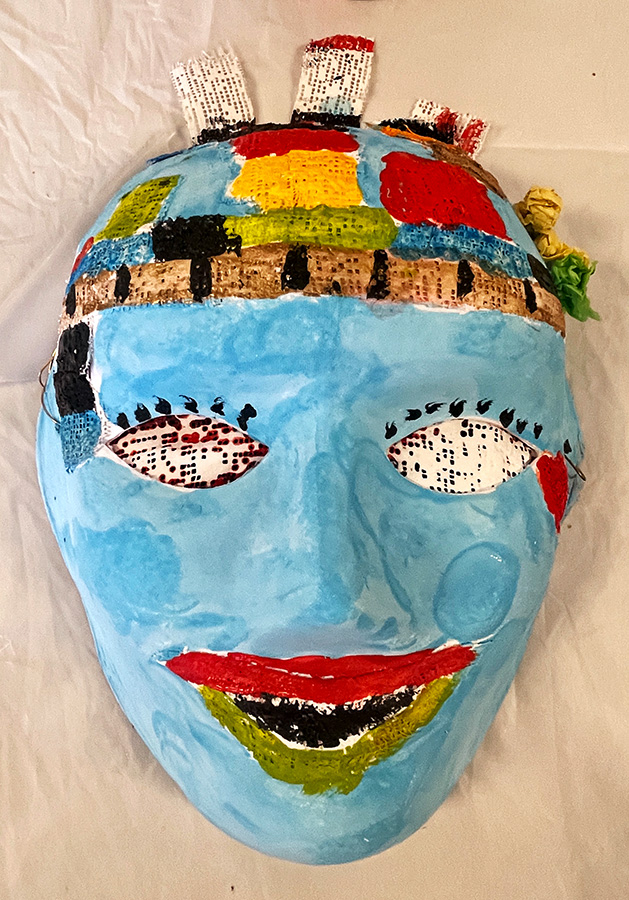
Guest Art, Unmasking Our Grief
Across cultures and time, relationships with the deceased are creatively invited, honored, and maintained. In Mexico, Día de los Muertos welcomes the dead home with sacred, heartfelt altars and offerings. Among many Indigenous tribes, ancestors are spoken to and visited through dreams.
In ancient Greece, dream incubation was practiced as a way of inviting guidance and visitation through sleep. In Tibetan Buddhist lineages, practitioners have long received teachings and guidance from masters and ancestors through dreams, recognizing dreaming as an authentic space of contact, transmission, and learning.
Swiss psychiatrist Carl Jung wrote about profound dream encounters with the dead, taking them seriously as meaningful psychological and spiritual experiences. Together, traditions and approaches reflect a shared understanding: love does not end with death, and connection can continue through ritual, memory, and dreaming.
This worldview of relating to the deceased is not new—it is deeply human, deeply needed and has become a safe and powerful gathering place on social media.
With a top 10% engagement rate on TikTok—and platform analytics revealing over 2.5 million video views in a remarkably short time—@awakeningsdreamwork has become a trusted, sacred space, normalizing, guiding and sharing the ongoing journey from loss to love.
As an artist and art therapist guiding others through grief work and dreamwork, I have made it my mission to normalize and embrace signs, visitation dreams and the felt presence of our Loved Ones as an alternate, compassionate path through grief – one that allows for an ongoing connection with the departed as a healthy way to cope. A path that offers agency, connection and even a softening of pain.
Decades of research in hospice and cultures around the world have shown that, through dreams and visions, deceased loved ones come to help us leave.
They can also come to help us stay.
End of life dreams and visions are well-documented, normalized and even expected in hospice settings.
They bring profound peace, comfort and love to those who are dying, supporting their transition, easing fear, inspiring faith and offering solace to those who are left. They rekindle hope where all was lost and inspire faith where none existed.
Dreams of our departed loved ones can carry the same profound impact for the bereaved. They also occur consistently across cultures and populations.
Exterior, Loving Memory Box™
Interior, Loving Memory Box™
And, whatever the guiding force may be, the dream maker seems to have one singular purpose: to support us through life’s most challenging and profound transitions.
Drawing from world wisdom traditions, art therapy, depth psychology, consciousness research and my own lived experiences, I have been blessed to synthesize what I know to be true: Through combining dedicated practices of art, contemplation, and dream incubation, we can evoke meaningful, healing dreams with our departed loved ones.
This work has lifted up another truth: we can cultivate an eternal, spiritual relationship with our loved ones that supports us in living our lives. We can embark on the Journey from Loss to Love.
What the Research Says
- According to the Pew Research Center, 46% of American adults reported a visitation dream from a deceased family member (this number increased to 53% when including other forms of interaction besides dreams).
- Other research shares that 78% of people who lost a pet dreamed of them within six months, and 86% of those who lost a spouse did so within a year.
- Across different types of loss, findings show that 57–86 % of bereaved people report dreams of their deceased loved ones
How Art Therapy Can Open the Door to Spirit
These dreams are frequently experienced as meaningful and even transformational: they can support emotional regulation, adjustment to loss, help process trauma and maintain continuing bonds with the deceased.
Why These Dreams Arise
Whatever the guiding force may be, the “why” behind these dreams is both a mystery and deeply personal. Perhaps they are our Loved Ones, responding to our pain, reminding us that they are okay and still with us.
Perhaps they arise as a compassionate necessity—helping regulate or soften our grief. Regardless of origin, they seem to serve one essential purpose: to support us through life’s most profound transitions.
Drawing from world wisdom traditions, art therapy, depth psychology, consciousness research and my own lived experiences, I have been blessed to synthesize what I know to be true: Through combining art therapy, contemplative practice and dreamwork, it is possible to bring forward meaningful, healing dreams with our Loved Ones in Spirit. As another path through grief, we can also use these practices to process our grief and cultivate an ongoing, spiritual relationship with those no longer here.
Art Therapy as a Mediator
Art is a spiritual path, and artists have been communing with spirit through their process since the beginning of time. Renowned psychic Medium Laura Lynne Jackson says, “When we make art, we are channeling the other side; they are coming through us; no artist works alone.”
Client Loving Memory Art
There is no need to believe in or visit a psychic medium to connect with our Loved Ones. We can create art that is a gateway to presence, bringing forward flow states, where we may experience timelessness, healing and connection. By virtue of its creation, creative practice may also open a door to something unseen. As Swiss Psychiatrist Carl Jung taught, when we call highly symbolic art into being, another door can open—one that connects us to the deeper psyche and the realm of spirit. Through this door, we honor our loved ones, our grief and ourselves.
During grief, art making also helps us express what is too painful for words. It can support our journey while transforming it into connection and love: this is The Art of Grief.
An Ancient and Ongoing Lineage
Guest Art, Unmasking Our Grief
Across cultures and time, relationships with the deceased are creatively invited, honored, and maintained. In Mexico, Día de los Muertos welcomes the dead home with sacred, heartfelt altars and offerings. Among many Indigenous tribes, ancestors are spoken to and visited through dreams.
In ancient Greece, dream incubation was practiced as a way of inviting guidance and visitation through sleep. In Tibetan Buddhist lineages, practitioners have long received teachings and guidance from masters and ancestors through dreams, recognizing dreaming as an authentic space of contact, transmission, and learning.
Swiss psychiatrist Carl Jung wrote about profound dream encounters with the dead, taking them seriously as meaningful psychological and spiritual experiences. Together, traditions and approaches reflect a shared understanding: love does not end with death, and connection can continue through ritual, memory, and dreaming.
This worldview of relating to the deceased is not new—it is deeply human, deeply needed and has become a safe and powerful gathering place on social media.
With a top 10% engagement rate on TikTok—and platform analytics revealing over 2.5 million video views in a remarkably short time—@awakeningsdreamwork has become a trusted, sacred space, normalizing, guiding and sharing the ongoing journey from loss to love.